




Raster-Scan Systems
A Raster-Scan System is a method of displaying images on a screen by scanning them line by line from top to bottom. This is the most common technique used in CRT (Cathode Ray Tube) monitors, modern LCD/LED screens, and most televisions. In this system, the display is made up of pixels arranged in a rectangular grid, and the image is generated by controlling the intensity and colour of each pixel.
How Raster-Scan Systems Work
-
Pixel Grid Formation – The display area is divided into a matrix of pixels (picture elements).
-
Horizontal Scanning – An electron beam moves left to right across each line of pixels, lighting them up according to the stored image data.
-
Vertical Scanning – After completing a line, the beam moves to the next line below until the entire screen is scanned.
-
Frame Refresh – The process repeats rapidly (usually 60–120 times per second), creating a stable and flicker-free image.
Components of a Raster-Scan System
-
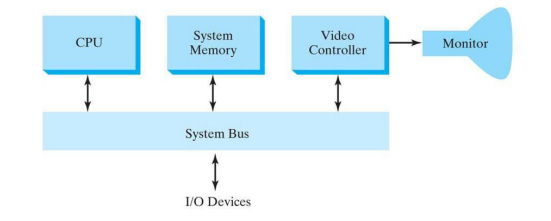
Frame Buffer – Stores pixel data for the entire screen.
-
Video Controller – Reads the frame buffer and generates signals to control the display.
-
Display Device – CRT, LCD, LED, or other pixel-based output screens.
-
Digital-to-Analog Converter (DAC) – Converts digital pixel data into analog signals for display (in older systems).
Advantages of Raster-Scan Systems
-
Supports complex and realistic images with a wide range of colours.
-
Easy to display photographs and shaded graphics.
-
Compatible with modern graphics and multimedia applications.
-
Supports animation and smooth motion with higher refresh rates.
Applications of Raster-Scan Technology
-
Television broadcasting
-
Computer monitors
-
Gaming consoles
-
Digital signage
-
Multimedia presentations