
Is Social Media Doing More Harm Than Good?
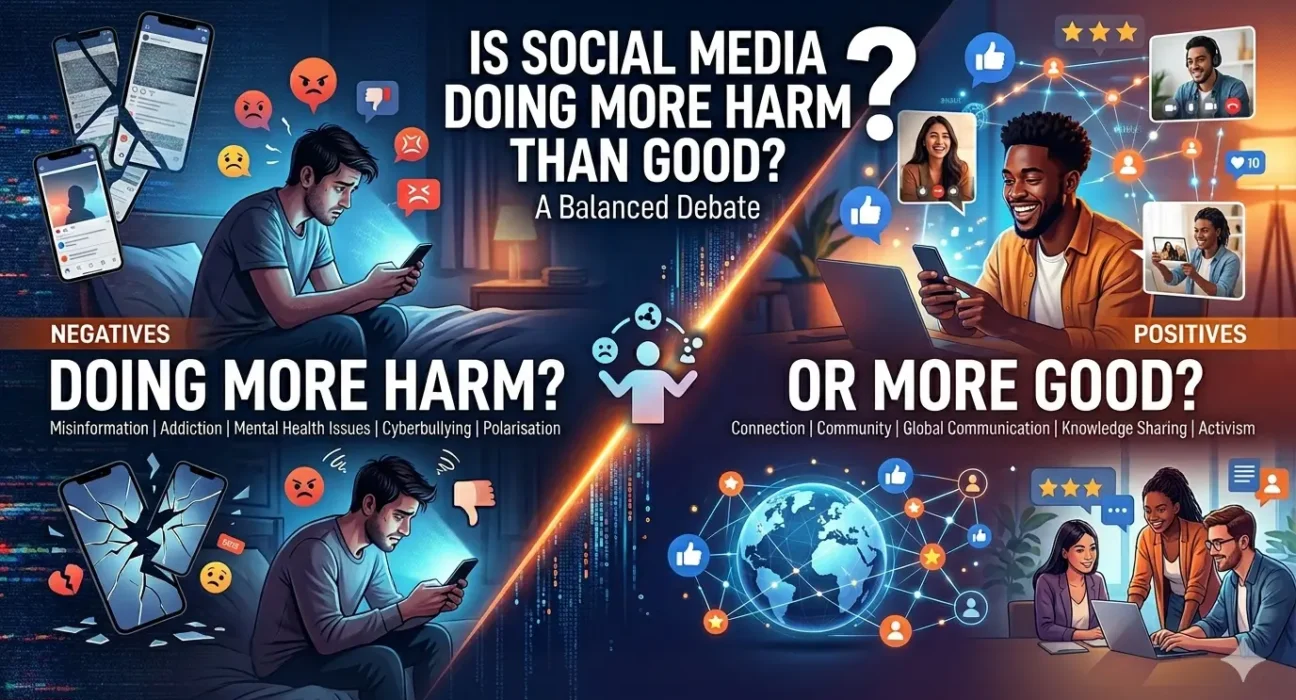
Social media has become a part of almost everyone’s daily life today. From sharing photos to chatting with friends, platforms like Instagram, Facebook, and WhatsApp have changed the way people connect. While social media offers many benefits, it also raises an important question. Is social media doing more harm than good?
Let us examine both sides of this debate.
To begin with, social media has made communication incredibly easy. People can connect with friends and family, no matter how far away they live. A simple message or video call can bridge huge distances within seconds. This has brought people closer together in ways that were not possible before.
Social media also serves as a powerful platform for learning and awareness. Many students use it to follow educational pages, watch tutorials, and stay updated on current events. In addition, it gives a voice to important causes, helping people spread awareness about social issues, charity work, and global problems.
Furthermore, social media offers great opportunities for creativity and self-expression. Many young people use platforms like YouTube and Instagram to showcase their talents, whether in art, music, or writing. As a result, social media has helped many individuals turn their hobbies into recognised skills, and sometimes even careers.
However, despite these advantages, social media also brings serious concerns.
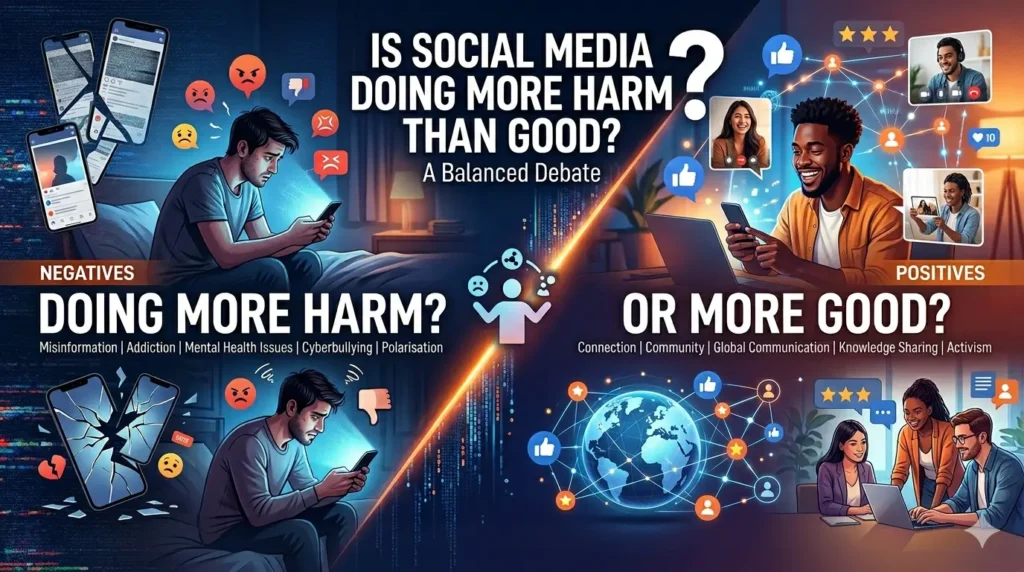
One major issue is its effect on mental health. Constant scrolling and comparing oneself to others online can lead to feelings of low self-esteem and anxiety. Many young users feel pressured to look perfect or live an exciting life, simply because that is what they see online. Over time, this pressure can affect their confidence and happiness.
Another concern is the spread of misinformation. Not everything shared on social media is true. False news and rumours can spread quickly, often before anyone realises the facts are wrong. This can create confusion, fear, and sometimes even harm in society.
Social media also reduces real-life interaction. Many people spend hours scrolling through their phones instead of spending time with family or friends in person. As a result, genuine conversations and relationships can suffer, even though people feel more “connected” online.
Additionally, excessive use of social media can affect academic performance. Students often get distracted by notifications, messages, and endless feeds. This makes it harder to focus on studies, leading to poor concentration and lower grades.
Cyberbullying is another serious issue linked to social media. Hiding behind a screen, some people say hurtful things they would never say in person. This can deeply affect a person’s emotional well-being, especially among young users.
Given these points, it becomes clear that social media is neither completely good nor completely bad. Its impact largely depends on how it is used. When used responsibly, with proper time limits and awareness, social media can be a valuable tool for learning, connection, and creativity.
In conclusion, social media holds both great potential and serious risks. While it connects people and opens doors to learning and opportunity, it can also harm mental health, spread misinformation, and reduce real human connection. Therefore, the key lies not in avoiding social media altogether, but in using it wisely. With the right balance, the benefits of social media can truly outweigh its drawbacks.