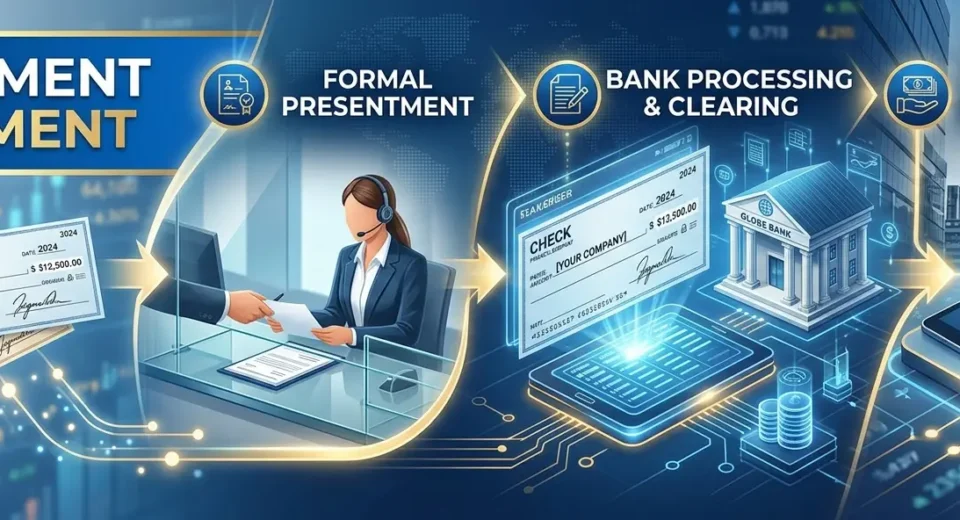





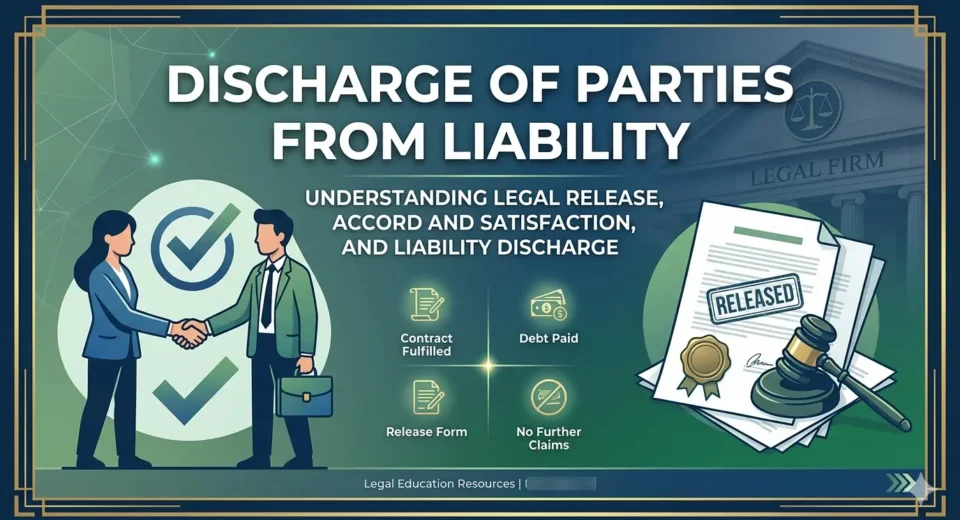
Discharge of Parties from Liabilites Business Law

Discharge of Parties from Liabilities

Meaning Discharge of parties refers to the release of a person — the maker, acceptor, or endorser — from their legal obligation on a negotiable instrument such as a cheque, bill of exchange, or promissory note. Once a party is discharged, only that specific party is freed from liability, while the instrument itself remains negotiable, […]
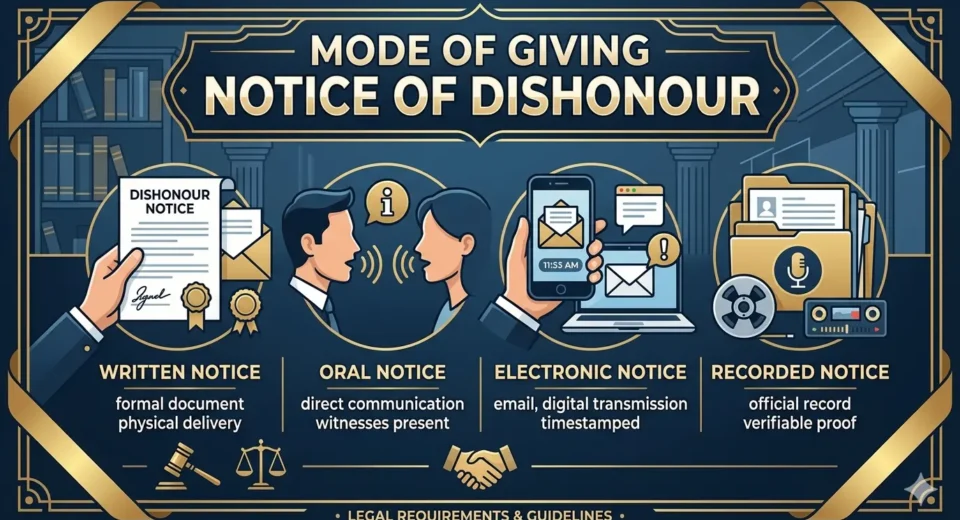
Mode of giving Notice of dishonour Business Law

Mode of giving Notice of dishonour

Meaning When a negotiable instrument such as a bill of exchange, promissory note, or cheque is dishonoured, either by non-acceptance or by non-payment, the holder is required to inform certain parties of this fact. This communication is known as notice of dishonour. Its purpose is to alert the parties who may be held liable, so […]

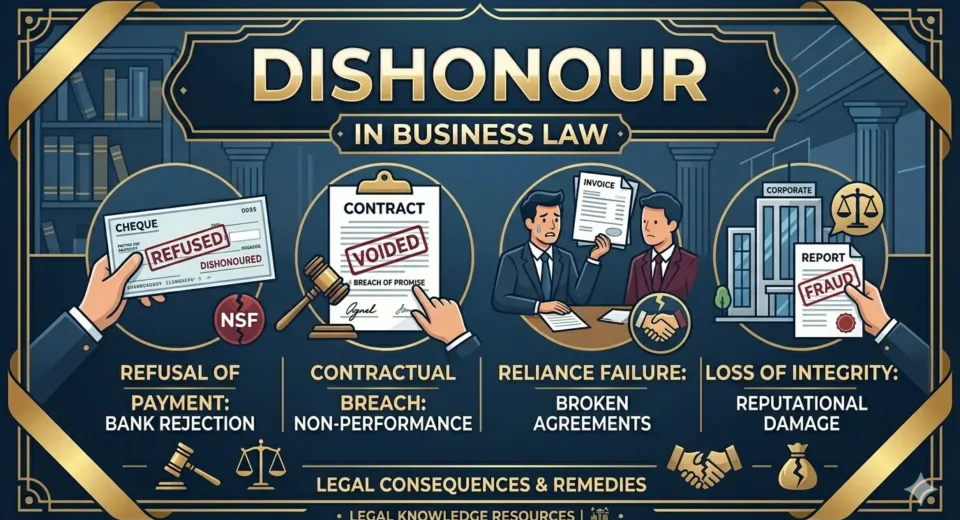
DISHONOUR Business Law

DISHONOUR

Dishonour is the refusal or failure to accept or pay a negotiable instrument when it is properly presented for acceptance or payment. In business law, the concept primarily applies to instruments such as a Cheque, Bill of Exchange, and Promissory Note. A negotiable instrument is said to be dishonoured when the person who is legally […]

Presentment for payment Business Law

Presentment for payment not necessary

Presentment for payment is generally required to demand payment of a negotiable instrument from the person liable to pay. However, in certain situations, the law does not require such presentment. In these cases, the holder can claim the amount even without formally presenting the instrument for payment. The following are the circumstances in which presentment […]

Presentment for payment Business Law

Presentment for payment

Presentment for Payment is the formal act of demanding payment from the person who is liable to pay a negotiable instrument, such as a cheque, bill of exchange, or promissory note. Definition Under the Negotiable Instruments Act, 1881, presentment for payment means showing or presenting the instrument to the maker, acceptor, or drawee and asking […]

Presentment for payment Business Law

When presentment for acceptance not necessary

Presentment for Acceptance is not necessary in the following cases: When the bill is payable on demand A bill payable on demand need not be presented for acceptance before payment is demanded. When the bill is payable after sight and the drawee cannot be found If the drawee cannot be found after a reasonable search, […]

Presentment for payment Business Law

Presentment

Meaning: Presentment means the formal production of a negotiable instrument to the person liable on it for acceptance or payment. According to the Negotiable Instruments Act, 1881, presentment is necessary to make the parties liable and to obtain acceptance or payment of the instrument. Types of Presentment Presentment for Acceptance The bill of exchange is […]

An acceptor for honour Business Law

An acceptor for honour

An Acceptor for Honour is a person who voluntarily accepts a bill of exchange that has already been dishonoured by non-acceptance, in order to protect the honour and credit of a party liable on the bill (usually the drawer or an endorser). Under the Negotiable Instruments Act, 1881, a person who is not originally liable […]