





Mode of giving Notice of dishonour
Meaning
When a negotiable instrument such as a bill of exchange, promissory note, or cheque is dishonoured, either by non-acceptance or by non-payment, the holder is required to inform certain parties of this fact. This communication is known as notice of dishonour. Its purpose is to alert the parties who may be held liable, so that they are aware of the default and can take appropriate steps to protect their interests.
The rules governing how such notice must be given are set out under the Negotiable Instruments Act, 1881, primarily within Sections 93 to 98. These provisions specify who must give notice, who must receive it, and the manner in which it should be communicated.
Purpose of Notice of Dishonour
The requirement of notice exists to ensure fairness among the parties connected to an instrument. Once a bill or note is dishonoured, parties other than the one who has defaulted need to know promptly, since they may still be liable to the holder. Without proper notice, such parties would have no opportunity to safeguard their position or seek remedies against earlier parties in the chain.
Who Must Give Notice
Notice of dishonour may be given by the holder of the instrument or by any party who remains liable on it and wishes to preserve their own right of recourse against other parties. A party who receives notice and wishes to make a prior party liable must, in turn, pass on notice to that party within a reasonable time.
To Whom Notice Must Be Given
Notice must be given to all parties whom the holder intends to hold liable. This typically includes the drawer and each endorser, since these are the parties who may be called upon to make payment once the primary party has failed to do so. A party who is not given proper notice is generally discharged from liability towards the person who failed to provide it.
Mode of Giving Notice
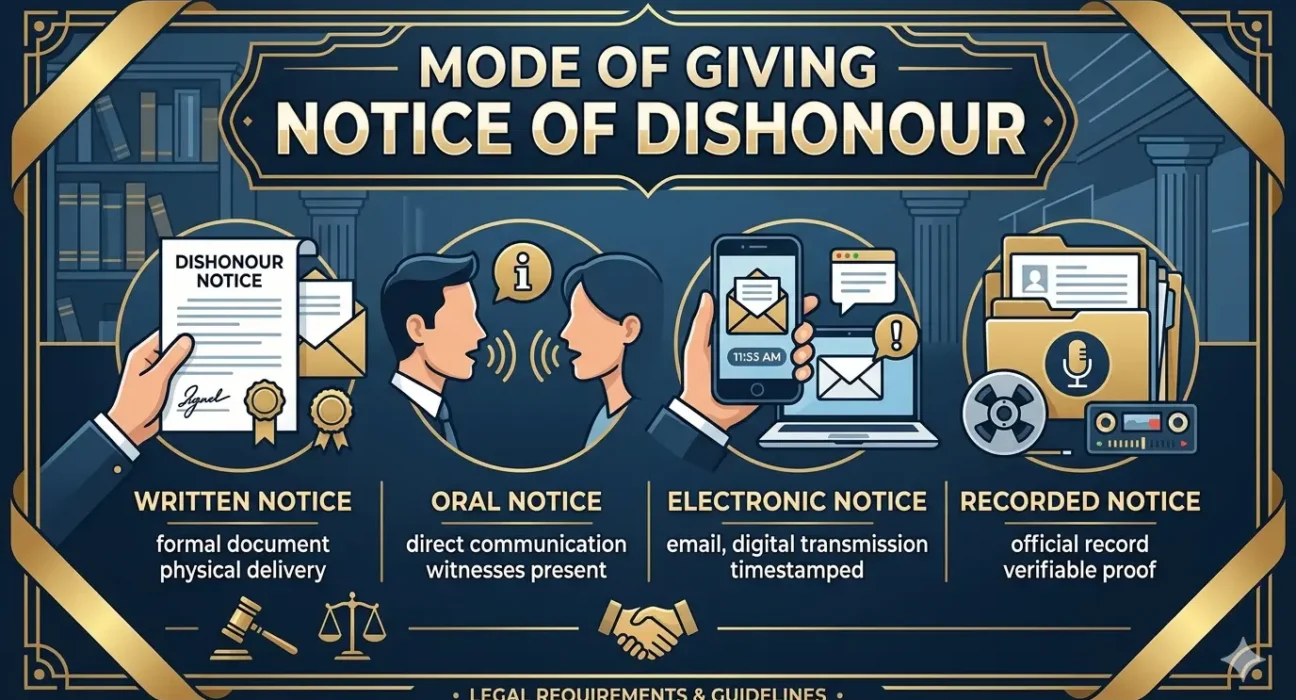
The Act does not insist on a single rigid format for notice. Instead, it allows considerable flexibility, provided the notice clearly conveys that the instrument has been dishonoured.
1. Notice May Be Oral or Written
Notice of dishonour may be given either orally or in writing. A written notice is generally preferred in practice, since it creates a clear and verifiable record, but the law does not treat oral notice as invalid.
2. Notice May Be Sent by Post
Where notice is sent through the post, it is treated as sufficiently given if it is correctly addressed and duly posted, even if it is delayed or never actually received by the party concerned. The responsibility lies in properly dispatching the notice, not in guaranteeing its delivery.
3. Contents of the Notice
The notice must clearly indicate that the instrument has been dishonoured, either through non-acceptance or non-payment. It should be sufficiently specific so that the recipient understands which instrument is involved and the nature of the default. Minor irregularities in wording do not necessarily invalidate the notice, so long as its substance is clear.
4. Notice May Be Given by an Authorised Agent
Notice need not always be given personally by the holder. It may also be given through a duly authorised agent acting on the holder’s behalf, and such notice carries the same legal effect.
5. Notice to a Deceased or Insolvent Party
Where a party entitled to receive notice has died, notice should be given to their legal representative, where one can reasonably be traced. Where a party has become insolvent, notice may be given either to the party personally or to their official assignee or receiver, where applicable.
Time Within Which Notice Must Be Given
Notice of dishonour must be given within a reasonable time after the dishonour occurs. What amounts to a reasonable time depends on the circumstances of each case, including the relationship between the parties and the usual course of business or post. Undue delay in giving notice may result in the discharge of parties who would otherwise have remained liable.
Effect of Failure to Give Notice
If proper notice of dishonour is not given to a party entitled to receive it, that party is, as a general rule, discharged from liability on the instrument. This makes timely and proper notice an essential step for the holder who wishes to preserve their right of recourse against drawers and endorsers.