



Discharge of Parties from Liabilities
Meaning
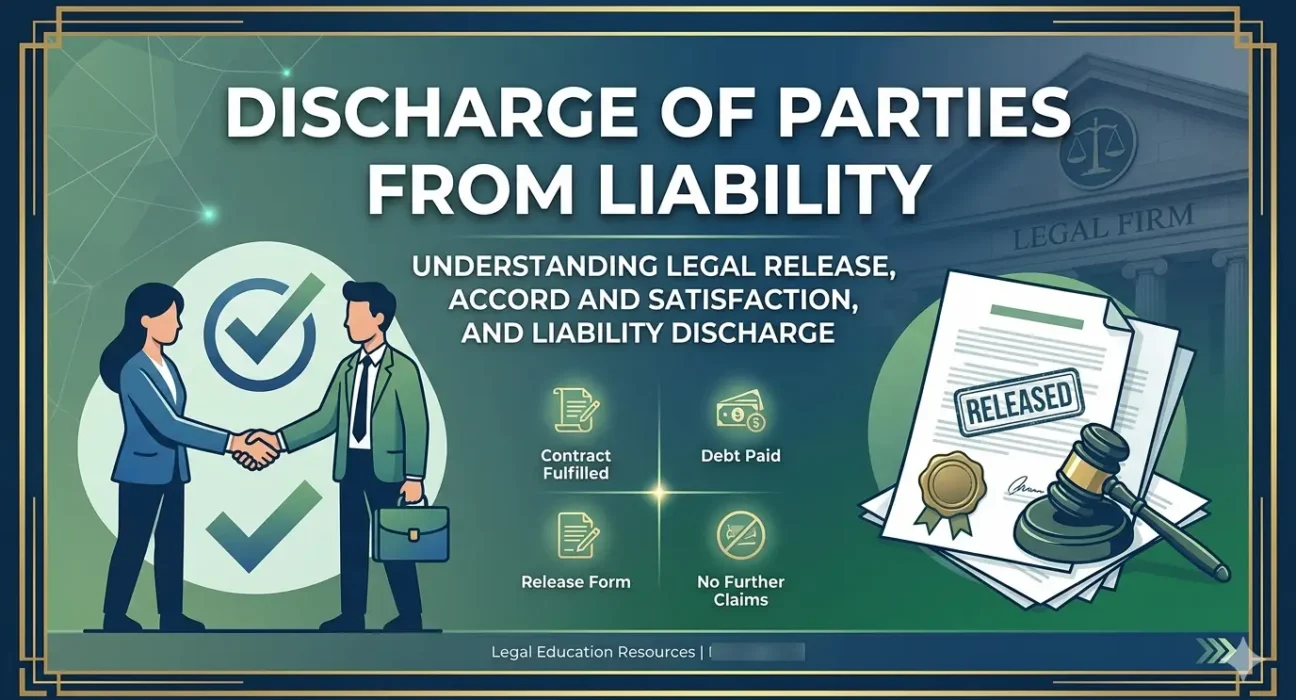
Discharge of parties refers to the release of a person — the maker, acceptor, or endorser — from their legal obligation on a negotiable instrument such as a cheque, bill of exchange, or promissory note. Once a party is discharged, only that specific party is freed from liability, while the instrument itself remains negotiable, and the remaining undischarged parties stay liable on it.
This is different from “discharge of the instrument,” which happens only when the party who is ultimately responsible for payment is released. At that point, every right of action under the instrument comes to an end.
Chapter VII of the Negotiable Instruments Act, 1881, under Sections 82 to 90, governs this topic and lays out several distinct modes through which a party can be discharged.
Modes of Discharge
1. By Payment in Due Course
This is the most common and straightforward mode. Section 82(c) of the Act addresses discharge through payment. When the party primarily liable pays the full amount to the rightful holder, in good faith and as per the agreed terms, the instrument stands discharged.
Example: A issues a promissory note in favour of B. When A pays the amount to B on maturity, the liability ends.
2. By Cancellation
Section 82(a) explains that when the holder, or their agent, cancels the name of a party on the instrument with the clear intention of discharging them, that party — along with anyone else who had a right of recourse against them — is released from liability.
3. By Release
Apart from cancellation, a holder may release a maker, acceptor, or endorser through other means, as covered under Section 63. Section 82(b) confirms that when a holder releases a party through any method other than cancellation, that party is discharged from liability, and so are any subsequent parties who had recourse against them.
4. By Allowing More Than 48 Hours for Acceptance
Under Section 83, when a bill of exchange is presented to the drawee for acceptance, the drawee is normally given only 48 hours, excluding public holidays, to decide. If the holder extends this period beyond 48 hours without the consent of earlier parties, those parties are discharged from liability.
5. By Non-Presentment or Delay
A cheque must be presented for payment within a reasonable time of issue. Unreasonable delay can discharge certain parties from their obligations.
6. By Material Alteration
Any unauthorised material change made to the instrument — such as altering the amount, date, or parties involved — discharges parties who did not consent to that alteration.
7. Becoming Holder in Due Course (Merger)
If a bill, after being negotiated through several parties, eventually comes back into the hands of the original acceptor, all rights of action are extinguished. This happens because the same person cannot owe a debt to themselves — liability and the right to claim it merge in one person and cancel each other out.
8. By Discharge as a Simple Contract
A negotiable instrument can also be discharged in the same manner as an ordinary contract — for example, through mutual agreement, novation, or operation of law.